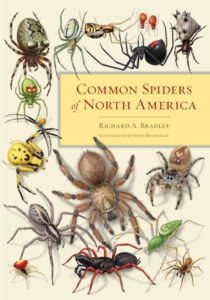
Contrary to what may be erroneously inferred from all the entomologically incorrect Halloween displays being more and more commonly seen these days, spiders do not possess internal calcified skeletons.
Common Spiders of North America
Contrary to what may be erroneously inferred from all the entomologically incorrect Halloween displays being more and more commonly seen these days, spiders do not possess internal calcified skeletons.
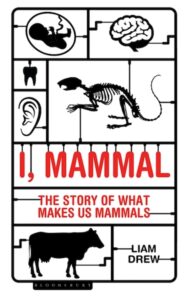
Mammal – noun (mam·mal | \ ˈma-məl \) Definition: any of a class (Mammalia) of warm-blooded higher vertebrates (such as placentals, marsupials, or monotremes) that nourish their young with milk secreted by mammary glands, have the skin usually more or less covered with hair, and include humans. (source: Merriam Webster) As a definition, it’s a […]
The other night, whilst reading through the introduction to the Britain’s Mammals; A Field Guide to the Mammals of Britain and Ireland by Messrs. Couzens, Swash, Still, & Dunn (more on that book soon…) I was struck by their explanation of just how much more it takes to make mammals mammals than simply the possession of mammary glands. However as their introduction was simply meant to be just that – an introduction – I began to contemplate the question in a larger frame of reference.
“Beauty is in the eye of the beholder.” So wrote Margaret Wolfe Hungerford in her 1878 novel “Molly Bawn.” But what about those eyes? Does it change matters if the eyes of one beholder don’t see things the same way as another? If they see colors differently – or perhaps see fewer or more subtle divisions in these colors? Perhaps they see into portions of the electromagnetic spectrum that others can’t perceive, which allows them to see patterns that are invisible to those lacking such perceptual capabilities?