
 If I’m honest, and I always try to be, I’ve been feeling very down-hearted for the past few months. I’ll spare you the details as I suspect that you likely are feeling the same for the same reasons. I don’t particularly enjoy anything anymore, even reading. I just work, take care of my family responsibilities, and that’s about it.
However the other day, I was looking through my podcast feed and deleting most of the new episodes as I just didn’t see the point in listening to them, when for some unknown reason I decided to listen to the new episode of The Plodcast that had recently been downloaded. It was a recording of an interview with Lucy Lapwing by Annabel Ross as the two rambled across the island of Bute. I had not previously heard of Ms. Lapwing, but rather surprising to me given my pervasive gloominess, I found myself captivated by her exuberant enthusiasm for the natural world through which she and Ms. Ross walked as the interview progressed. In the middle of a sentence, she’d shout with joy and call out a sighting of a Dor Beetle, a Gannet, or one of many other animals and plants that caught her attention.
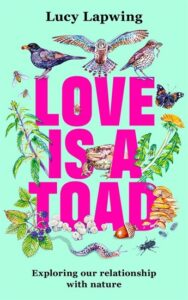
One of the main subjects of the interview itself, when interesting nearby flora and fauna were not being discussed, was the publication of her new book Love is a Toad; Exploring Our Relationship with Nature by Bonnier UK. This new book presents, and as I’ve not been so fortunate as to be able to read it yet as it isn’t available in the U.S. and therefore I’ll quote the publisher’s own description of it, “[a] lyrical exploration of our complex and intricate relationship with the natural world in all its muddy, messy and beautiful glory.” I have every reason to trust that these words are true as near the end of the interview Ms. Lapwing read into the recording the short but absolutely brilliant essay – or perhaps it is a poem – from which the book’s title is taken. Hearing her reflections upon the toad that inspired it, very much against my will given my recent state of mind, I found myself uncontrollably smiling.
I highly encourage you to give ear to this podcast episode. I don’t see the need to encourage you to buy a copy of the book because if you take my advice about the podcast, you’ll find yourself doing precisely that of your own accord.
If you enjoyed reading this, please consider signing up for The Well-read Naturalist's newsletter. You'll receive a helpful list of recently published reviews, short essays, and notes about books in your e-mail inbox once each fortnight.
