Featured Book Review
In Praise of Folly Brook
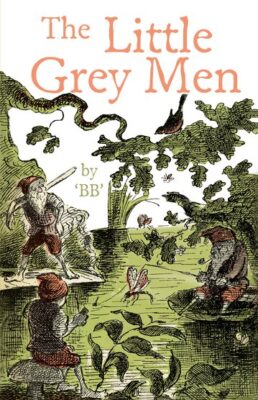
As I have been with many other authors and books that have since joined my favourites, I was introduced to the works of B.B., the pen name of Denys Watkins-Pitchford, MBE, by Melissa Harrison through By Ash, Oak, and Thorn, her homage to his book The Little Grey Men. For those unfamiliar with B.B., and since becoming aware of him and his works myself I am regularly surprised by how many aren’t. He was a particularly prolific author, artist, naturalist, and that increasingly rare personage, a countryman. He wrote and published scores of books of fiction – many for younger readers – and non-fiction, illustrated not only his own but those of others as well, studied art in both Paris and at the Royal College of Art in London, was art master at Rugby School for nearly two decades, and near the end of his life was honored with an MBE by Her Majesty Queen Elizabeth II. Yet whether in the country or the city, his love of the natural world was the guiding force of his life, as testified by his famous motto:
The wonder of the world
The beauty and the power,
The shapes of things,
Their colours, lights and shades,
These I saw.
Look ye also while life lasts.
Newly Noted Books
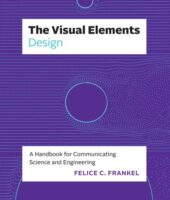
The Visual Elements – Design
For those whose occupation – or avocation – involves communicating complex information to an audience, be that audience collegial or non-specialist, the ability to create and employ charts, diagrams, illustrations, and other visual images that support what is being presented is perhaps of greater importance now than it has been in centuries.
Little Books of Nature
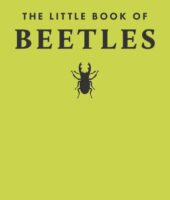
With a format, size, and style of content that is very reminiscent of the original Golden Guides and the Observer’s Books series, the new Princeton University Press Little Books of Nature series is a welcome development indeed.
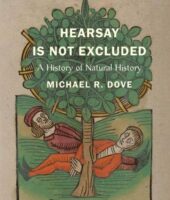
Hearsay Is Not Excluded
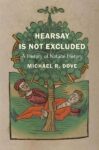
In his new book “Hearsay Is Not Excluded; A History of Natural History,” Prof. Michael R. Dove takes up the histories of four representative natural historians from the previous four centuries – Georg Eberhard Rumphius, Carl Linnaeus, Alfred Russel Wallace, and Harold C. Conklin – to examine how their own studies were undertaken in times and socio-cultural circumstances when crossing today’s more fortified disciplinary boundaries was not only allowed but expected.
Science v. Story
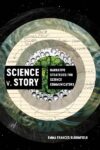
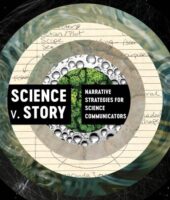
In continuation of her exploration into effective ways to bridge our society’s present chasm between proponents of science and skeptics of it, Prof. Emma Frances Bloomfield’s new book “Science v. Story” examines four very pertinent present-day challenges to science communicators – climate change, evolution, vaccination, and COVID-19 – from the perspectives of their narratives and their counter narratives, to demonstrate how effective story-telling is essential to effective science communication in the modern world.
The Deorhord
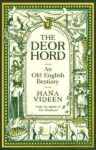
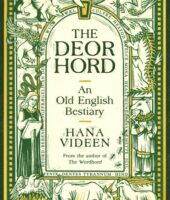
With her superb mix of erudition and wit, Dr. Hana Videen’s first book “The Wordhord: Daily Life in Old English” captured both the minds and hearts of those who read it. Now, in her second book, The Deorhord; An Old English Bestiary,” she delves more deeply into the fascinating and sometimes mysterious hoard of Old English words used to describe the animals known to the medieval English world.
Birds of China
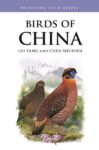
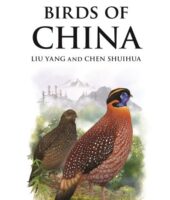
For most of the places I visit, a single field guide is sufficient to cover the area at hand; however when I travel in China, with its 1,431 species of birds to be found within its borders, no single field guide has previously been sufficient to cover the expansive area across which I must travel on my duly appointed factory-visiting rounds. Fortunately, this past January that changed…
Naturalist Classics
Back to Basics Through Black and White
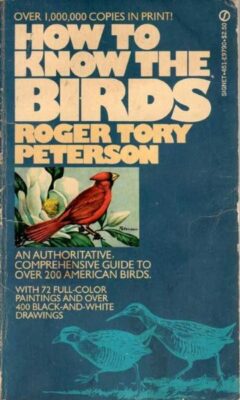
After being rejected by four other publishers who thought the market for such a book was too small to be worth their time, when Roger Tory Peterson’s A Field Guide to the Birds: Giving Field Marks of All Species Found in Eastern North America was first published on 27 April 1934 by Houghton Mifflin in an initial printing of 2,000 copies, it sold out in two weeks. It has ever since reigned as the monarch of North American field guides, being still available in the seventh edition Peterson Field Guide To Birds Of Eastern & Central North America, now published by HarperCollins following Houghton Mifflin (Harcourts)’s sale of its trade publishing division and other assets to News Corp in 2021. But enough about the board room machinations of the present-day masters of the universe
While most bird watchers have almost certainly seen a copy of at least one of the printings of one of the editions of Peterson’s field guides to birds, many may not have seen a first edition of it. Unlike the present-day editions of the Peterson field guides, and most all new field guides in general, the first Peterson guide was noteworthy for the eloquent brevity of its text, and its black and white images. (For those interested, Houghton Mifflin published a reprint edition of this classic book in 1997 that while now out-of-print can still be found with regularity in shops selling used books.) These black and white images – both plates of Peterson’s paintings and line illustrations – were partly due to the economically-dictated limitation of such guidebooks of the time as color printing was far more expensive then than it is today.Keep reading…
Recent Book Reviews
The Marvelously Multifaceted Mr. Newton
Most of us likely first heard the name Isaac Newton when we were in primary school. For some, it may have been in a classroom; for others it may have been while viewing a television program – most likely a cartoon. However, in most all instances, I’d be willing to wager that the name was connected with a falling apple. As we grew, the caricature of the man in the long coat and knee-length breeches sitting beneath a tree and being brained by a falling pippin likely gave way to the image of Newton as an extremely intelligent man who did something with gravity and mathematics. This is where the story comes to a conclusion for most. Yet for those of us who remained interested in science or theology – yes, theology – details of Newton’s life continued to emerge and enlarge our image of him. The tricky part is that the more details that became known to us, the more confused we were likely to become as at a particular point they seem to describe not a single person but two, perhaps even three – all of whom would too easily be thought today to be polar opposites to one another. Keep reading…
Then There Were Dragons
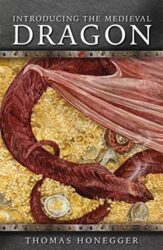
The phrase “here there be dragons,” so famously seen on old maps indicating places where there were great and mysterious dangers to be found, was not so very long ago not simply a metaphor. In fact, no less an authority on natural philosophy (what would later become known as natural history) than Linnaeus himself included dragons in the Paradoxa category of the first edition of his Regnum Animale. It was only with his removal of this “ragbag” section in which they had been included from the second edition that the idea that dragons might not actually exist in any physically demonstrable way began to become the norm. And even then, when Miss Anning’s famous paleontological discoveries in the blue lias cliffs of the Dorset coast were brought to popular attention, the question still lingered in the minds of many where they may simply not exist any longer.Keep reading…
Mister Binocular
Binocular Versus Binoculars

While it may seem either too basic to mention or perhaps overly pedantic, the first step in getting to know your binocular is learning to differentiate the words “binocular” and “binoculars.”
Introducing “Know Your Binocular”

Over my career creating binoculars (and other small optical instruments), I’ve been asked a wide range of questions about them, so I thought it would be useful to create a hashtag devoted to understanding these very useful instruments. I’m calling it Know Your Binocular.
Upon Reflection
More Things
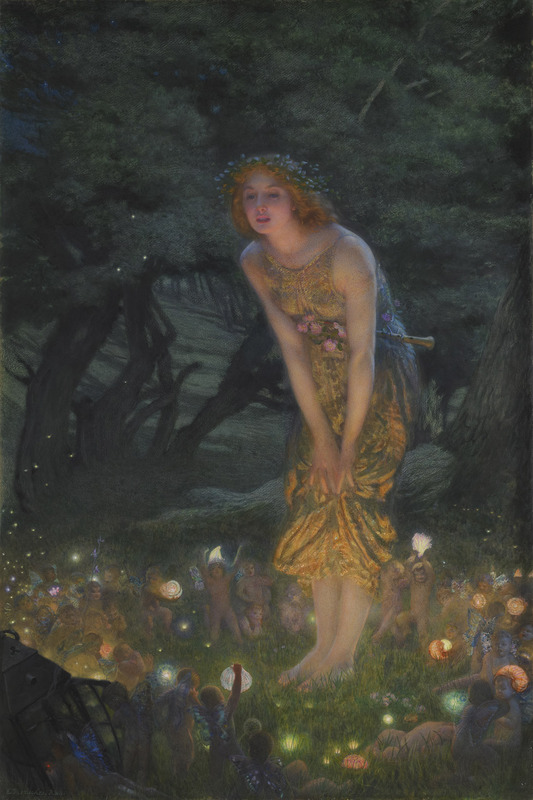
I am introducing a new section to The Well-read Naturalist with the title “More Things” in honor of the famous quote from Shakespeare’s “Hamlet;” a play and a sentiment both of which I very much admire.
Newly Noted Podcasts
The Stubborn Light of Things – Greenman Festival Edition
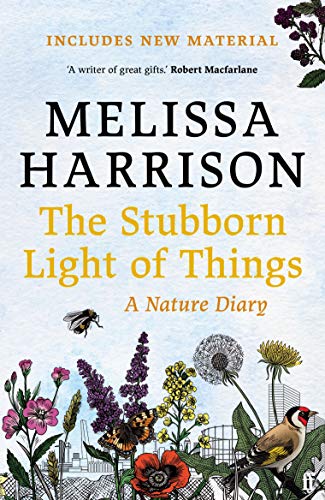
It was with great surprise and joy that I opened my podcast feed this past Tuesday as I set out on my morning walk to find a new episode of “The Stubborn Light of Things” queued-up atop the list. After nearly three years of silence, I once again was greeted with Ms. Harrison’s long-missed, gentle, and reassuring “Hi, How ya doing?”
Marginalia
Take My Words For It
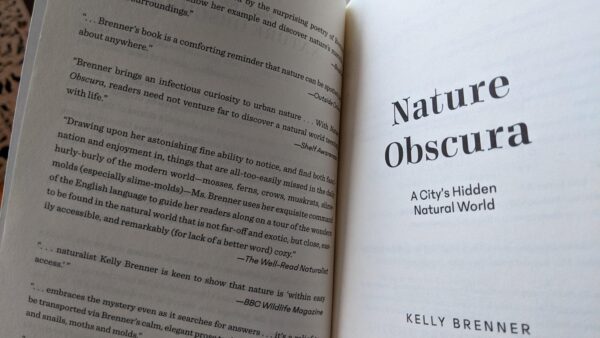
Back in March 2020, I published a review of Kelly Brenner’s then recently released book “Nature Obscura; a City’s Hidden Natural World.” It is a work by which I was – and still very much remain – much impressed by its overall concept, its content, and its writing style; which is why it continues to be one of the books I still commonly recommend to all seeking a book in which to loose themselves in the wonders of the natural world.
Commonplace Book
The Rev. White on the Good Fortune of Having Like-minded Neighbours
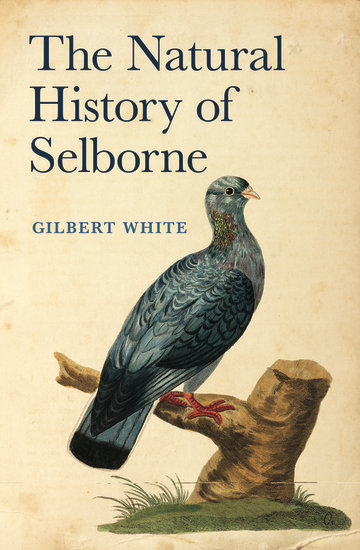
“It has been my misfortune never to have had any neighbours whose studies have led them towards the pursuit of natural knowledge; so that, for want of a companion to quicken my industry and sharpen my attention, I have made but slender progress in a kind of information to which I have been attached from my childhood.”