In her recently published “Otter Country; An Unexpected Adventure in the Natural World,” noted nature writer Miriam Darlington explores the world of the otter as it is found in England, Scotland, and Wales.
Otter Country


In her recently published “Otter Country; An Unexpected Adventure in the Natural World,” noted nature writer Miriam Darlington explores the world of the otter as it is found in England, Scotland, and Wales.
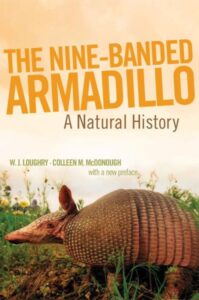
In taking up the new edition of “The Nine-banded Armadillo; A Natural History,” I was still pondering over the news I had recently read explaining that Dasypus novemcinctus, the taxonomic binomial for the title species, has been discovered to be four different species, the northern most of which was to be re-identified as the Mexican Long-nosed Armadillo. How, I wondered, does one review a book about the natural history of a species when that species has since the time of the book’s publication been re-defined?

Just how much of a disruption the extirpation of Wild Boar from Great Britain caused, and how the modern day human inhabitants of the area are accommodating themselves to the recent re-introduction of these long-absent artiodactyls to it, are explored at length by Chantal Lyons in her recently published book “Groundbreakers; The Return of Britain’s Wild Boar.”

Not so very long ago, the new volume “Ponds, Pools, and Puddles” by Jeremy Biggs and Penny Williams found its way from Devon to my post box in Oregon. The 148th volume in the series, this most recently published volume takes, as I’m confident you could easily guess, as its subject the ecology of the smaller-than-lake sized bodies of fresh water as they appear in the U.K.