Newly published in the U.S. as of March 2026, “Bats of the World: A Guide to Every Family” by Winifred Frick and M. Teague O’Mara offers a richly illustrated profile of every family of the Order Chiroptera.
Bats of the World
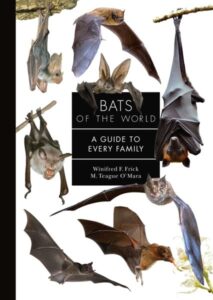

Newly published in the U.S. as of March 2026, “Bats of the World: A Guide to Every Family” by Winifred Frick and M. Teague O’Mara offers a richly illustrated profile of every family of the Order Chiroptera.
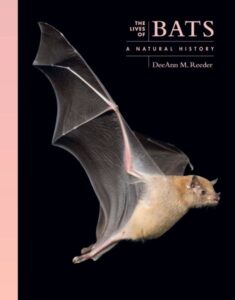
Through overviews of their general life history, biology, and particular abilities such as echolocation, enhanced with profiles of representative as well as particularly interesting bat species, “The Lives of Bats” offers all interested in these remarkable mammals a very useful way to develop their understanding of them.

In taking up the new edition of “The Nine-banded Armadillo; A Natural History,” I was still pondering over the news I had recently read explaining that Dasypus novemcinctus, the taxonomic binomial for the title species, has been discovered to be four different species, the northern most of which was to be re-identified as the Mexican Long-nosed Armadillo. How, I wondered, does one review a book about the natural history of a species when that species has since the time of the book’s publication been re-defined?
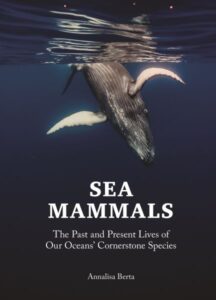
Combining presentations of both long-extinct as presently living species, Prof. Annalisa Berta’s new book “Sea Mammals; The Past and Present Lives of Our Oceans’ Cornerstone Species” provides her readers with a rich understanding of how, where, and at times even why these obligate air breathing creatures have come to spend their entire – or at least a significant part of their – lives in the planets seas.