Earlier this month, Mark took Professor Dieter Helm’s new “Green and Prosperous Land; a Blueprint for Rescuing the British Countryside” as the subject for his Sunday book review.
A Green and Prosperous Britain


Earlier this month, Mark took Professor Dieter Helm’s new “Green and Prosperous Land; a Blueprint for Rescuing the British Countryside” as the subject for his Sunday book review.
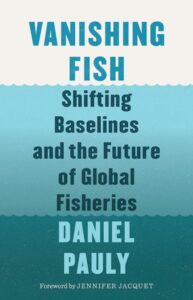
In her 1970 “Big Yellow Taxi,” Joni Mitchell famously sang “Don’t it always seem to go / That you don’t know what you’ve got / ‘Till it’s gone.” Dr. Daniel Pauly took that one step further in his 1995 paper “Anecdotes and the shifting baseline syndrome of fisheries” by pointing out that not only do we not know what we’ve got, but due to shifting baselines syndrome, when it’s gone we won’t know we ever even had it.
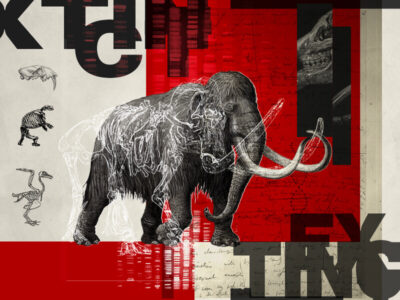
Given the popularity of such recent books as Britt Wray’s “Rise of the Necrofauna” and Beth Shapiro’s “How to Clone a Mammoth,” as well as the publication of the most recent addition to the still growing body of literature taking the topic as its subject, Ben Minteer’s “The Fall of the Wild,” it shouldn’t be surprising that Intelligence Squared U.S. gathered together four people with quite different views on the matter for one of their Oxford-style debates.
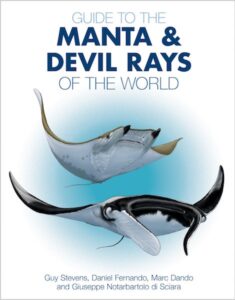
Even among all the remarkable and fascinating rays of the world, manta and devil ray are special. Evolutionarily freed from bottom-dwelling status, their wing-like fins propel them gracefully and seemingly effortlessly through – and in some cases even above for short periods of time – the the open waters of the world’s oceans. Think back to when you last saw one featured in a nature documentary; it likely elicited an audible gasp of wonder and astonishment.