One plus one equals two.
Two plus two equals four.
Regardless of how much you want it to, or how zealously you try to make it do so, one plus one will not equal three, nor will two plus two equal five. Math just doesn’t work that way.
New and forthcoming books that are worthy of attention but that have not yet been fully reviewed.
One plus one equals two.
Two plus two equals four.
Regardless of how much you want it to, or how zealously you try to make it do so, one plus one will not equal three, nor will two plus two equal five. Math just doesn’t work that way.
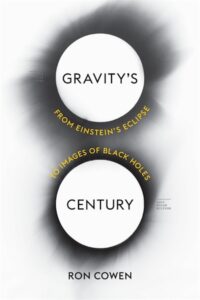
29 May 1919 – teams of scientists in Brazil and on the west coast of Africa observed and documented the positions of stars during a total solar eclipse, the results of which when analyzed confirmed Einstein’s recently published theory of general relativity.
11 April 2017, a different team of scientists (those of the first team having long since retired, both professionally and existentially) completed five days of networked radio-telescopic observations of the event horizon of a black hole.
What do these two dates have in common? Read on…
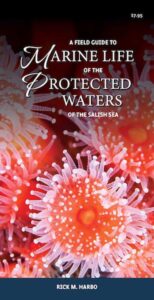
I fell head-over-field-kit in love with the Salish Sea the first time I set eyes upon it, and each return visit has only served to deepen and enrich my affections for it. Naturally, whenever I’m given the chance, I revel in walking along its shores, both to admire its beauty as well as to seek-out some of the fascinating forms of life it holds within its waters, made visible to land-bound observers in its coastal tide pools (as well as in the superb educational displays of such visit-worthy institutions as the Shaw Centre for the Salish Sea).
In these days when everything seems to be being questioned – sometimes honestly, other times with nearly palpable disingenuousness – the idea that someone would actually ask the question “why trust science?” is not particularly surprising. To those of us who have spent our lives studying one or more of the various disciplines of science, or who simply find ourselves naturally turning to science for answers to many of life’s challenges, both large and small, the question at first seems illogical. One might as well ask “why breath air?”