
 Perhaps it’s because I have less interest in travel these days. Perhaps it’s because I’m simply tired. Perhaps it’s because the shininess has worn of the world as I now see it. Perhaps it’s simply because I’m growing old. Whatever the reason, I no longer seem to possess the fascination for the exotic that I did as a young man. Be it places, events, food, or most anything else, I find myself preferring the quiet comforts of home to the promises of adventure. As Bilbo Baggins so well put it, “We are plain quiet folk and have no use for adventures. Nasty disturbing uncomfortable things! Make you late for dinner!”
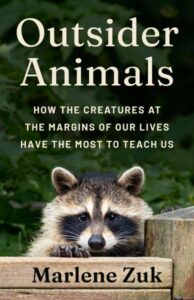
This extends to my personal studies of natural history as well. Where once I dreamed of traveling to the far corners of the world with hopes of seeing the marvels of flora and fauna to be found there, my interests now are in sitting quietly in a comfortable location watching crows crack walnuts on the pavement or pondering the plumage subtleties of the local Western Gulls. You may even have noticed this in the subjects of some of the books I’ve been writing about recently: European Starlings, moths, wildlife in urban areas. So it should not surprise you that Prof. Marlene Zuk‘s new book Outsider Animals: How the Creatures at the Margins of Our Lives Have the Most to Teach Us caught my attention from the first moment I heard of it.
Taking as her subjects such widely derided, generally synanthropic (comfortable and often benefiting from living around humans but not domesticated) animals as cockroaches, cowbirds, rats, and gulls, and others that while charismatic or photogenic to some are more commonly thought to be problems to most, such as Northern Raccoons and Coyotes, Prof. Zuk gently guides her readers into less judgemental and more inquisitive examinations of the lives and activities of these creatures. In so doing, she offers a much less prejudiced and much better informed understanding of not only how the live but what humans have learned – and still have to learn – from them.
From interesting, insightful, and not infrequently humorous observations of both her subject animals, including the humans around whom they live, to some of the most deep and mind-expanding questions pertaining to them (if the chapter on cowbirds doesn’t cause you to loudly exclaim “Wow!” or something similar, you didn’t read it with sufficient attention so please read it again), Outsider Animals is a book well worth the attention of all naturalists and a fine book as well for anyone casually interested in learning more about the wildlife they are most likely to encounter in their daily lives.
If you enjoyed reading this, please consider signing up for The Well-read Naturalist's newsletter. You'll receive a helpful list of recently published reviews, short essays, and notes about books in your e-mail inbox once each fortnight.
