
 When I was a very young boy, I had – as many naturalists did in their youth – a fascination with dinosaurs. I had a few well-thumbed books about dinosaurs that I would carry around with me, a couple dozen little monochomatic plastic models of dinosaurs that I played with, and an limitless amount of enthusiasm for telling anyone foolish enough to ask about the previously mentioned possessions all I knew about dinosaurs. Of course, being a very young boy when I was, dinosaurs were still cold-blooded, scaly, slow-moving, dim-witted monsters. There were also only a fraction of them known then than there are now.
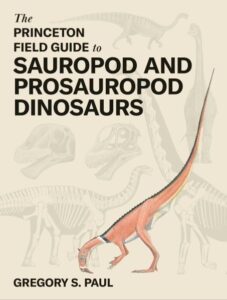
Had a book existed such as The Princeton Field Guide to Sauropod and Prosauropod Dinosaurs, it very likely would have been my most prized possession, and would have increased my already elevated level of precociousness by at least an order of magnitude. Written by noted palaeontological author and illustrator Gregory S. Paul, this new book joins Mr. Paul’s four previous ones in the Princeton Field Guides series: The Princeton Field Guide to Dinosaurs, The Princeton Field Guide to Predatory Dinosaurs, The Princeton Field Guide to Mesozoic Sea Reptiles, and The Princeton Field Guide to Pterosaurs.
While very young me was well versed in the then-known information about the Brontosaurus, I had not even heard of such creatures of prosauropods, but then while I was bothering indulgent adults about the former, Mr. Paul was laying the foundations of his remarkable career in the then unfolding dinosaur renaissance that would not only unearth hundreds of new species of these remarkable creatures but also transform ideas of what they looked like and how they lived.
Thus in this new book are presented two-hundred-seventy-five species of sauropods and prosauropods, bringing them to life in both colour and black-and-white illustrations, and presenting readers with the most up to date information about their anatomy, physiology, locomotion, reproduction, growth, size, and extinction. Flipping through its pages, I found myself absolutely astonished that so much has been discovered about the beloved creatures of my childhood imagination in the mere span of my lifetime. I very much look forward to spending much more time with this enlightening new book and perhaps even reconnecting with that very young boy from long ago. He was a nice little fellow and I have only realized recently how much I liked him.
If you enjoyed reading this, please consider signing up for The Well-read Naturalist's newsletter. You'll receive a helpful list of recently published reviews, short essays, and notes about books in your e-mail inbox once each fortnight.
