
 As a long-time birdwatcher and even longer-time bibliophile, what with the rise of pocket-sized digital misery mirrors (what I have taken to calling mobile phones) I am becoming increasingly concerned about the future of printed field guides to birds. As number of digital apps continues to increase rapidly, the leaders in the field – Merlin and iNaturalist – are becoming the default source of information for more and more birdwatchers. Yet while I do admit that I use both these apps, as well as eBird, to do my part in contributing to the citizen science projects they make possible, I still cling tenaciously to my tried and true traditional field guides for learning to and actively identifying the birds I observe.
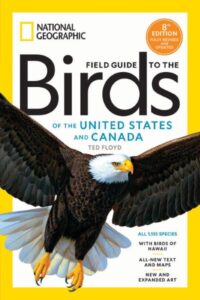
Which is why, after what I see as a rather long hiatus since the last major updates of two of the cornerstone field guides to the birds of North America, Peterson and Sibley, I was particularly pleased to learn that the third, the National Geographic Field Guide to the Birds of the United States and Canada, has recently been published in a new, fully revised, significantly expanded, and extensively updated Eighth Edition. Produced under the direction of a new editor, Mr. Ted Floyd, and including the work of a small army of textual and artistic contributors, this new edition takes point in being the most up-to-date printed field guide available to birdwatchers who raise their binoculars all across the United States – including the Hawaiian Islands – and Canada.
As a copy has only recently reached me, I am still very much putting it through its paces; however I have already keenly and with appreciation noted the remarkable number of species this new edition includes (1,155 to be exact) and the increased attention given to more aspects that contribute to effective identification of birds in the field than just field marks.I’ll have much more to write about this new field guide once I have spent sufficient time afield (and a-chair) with it, but for now, you may safely assume that I am very impress with what I have discovered in it thus far.
If you enjoyed reading this, please consider signing up for The Well-read Naturalist's newsletter. You'll receive a helpful list of recently published reviews, short essays, and notes about books in your e-mail inbox once each fortnight.
