
 This April I will be traveling to Los Angeles, California in order to attend the National Science Teaching Association‘s annual conference, being held for the year 2026 in Anaheim. While I don’t have time specifically budgeted for any field forays or similar natural history pursuits, I’m never without at least a small binocular or monocular, and a hand lens that can be quickly deployed should the opportunity arise. And in the Los Angeles basin, even in the most heavily developed areas – such as around the Anaheim Convention Center – opportunities are sure to do just that, particularly opportunities to observe and examine species of plants and animals that are not native to the area.
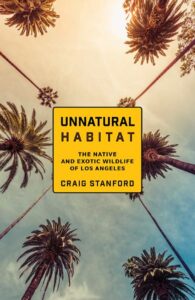
As I like to familiarize myself with the natural history of any area to which I’m traveling, I make it a point to read through a field guide or natural history profile of the area prior to my trip. For this present trip, I’m taking full advantage of a very interesting book published in 2024 by Heyday: Craig Stanford‘s Unnatural Habitat; the Native and Exotic Wildlife of Los Angeles.
Presenting his readers with the stories behind and natural histories of a range of plant and animal species from peafowl to Pumas to palms, from bees to Black Widows, from opossums to oaks, Prof. Stanford’s essays offer lively, informative, often surprising explorations into the native and non-native flora and fauna of the area. At the time of this writing I’m well into my reading of the book and finding it to be delightfully captivating, and I’m looking forward to putting what I am learning from it to use during my upcoming journey.
If you enjoyed reading this, please consider signing up for The Well-read Naturalist's newsletter. You'll receive a helpful list of recently published reviews, short essays, and notes about books in your e-mail inbox once each fortnight.
