
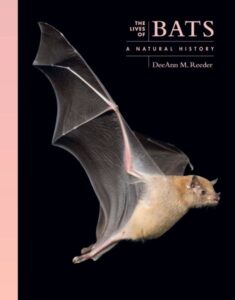
 Just the other evening, my family and I were viewing an old episode of Pointless when the question was posed to the contestants to name species of bats in Great Britain. As we were discussing whether particular species were to be found in the Scepter’d Isle, I was reminded that Princeton University Press had recently published a new book about bats in their The Lives of the Natural World series: The Lives of Bats; A Natural History.
In this new book, Prof. DeeAnn M. Reeder presents her readers with a lively, richly photo illustrated introduction to this very large taxonomic order of mammals – the second largest, encompassing over 1,400 species. Through overviews of their general life history, biology, and particular abilities such as echolocation, enhanced with profiles of representative as well as particularly interesting bat species, The Lives of Bats offers all interested in these remarkable mammals a very useful way to develop their understanding of them.
As bats have such an unfortunate, long-standing, and persistent negative image across a number of human cultures, especially recently with their popularly reported association with the CoVid-19 pandemic, I very much recommend that all naturalists and life science teachers, especially those involved in public outreach activities, take advantage of the education about these animals presented in this book. The coverage of their importance to their ecosystems, their remarkable diversity, and yes, their relationship to diseases that can affect humans, will unquestionably serve well in any presentation or discussion about them in which such publicly active naturalists participate.
If you enjoyed reading this, please consider signing up for The Well-read Naturalist's newsletter. You'll receive a helpful list of recently published reviews, short essays, and notes about books in your e-mail inbox once each fortnight.
