
I strongly believe in the importance of learned society and amateur enthusiast journals. I have every copy of every issue that I have received of the Society for the History of Natural History‘s journal Archives of Natural History since I first joined the Society. I’ve read them all and regularly return to them as my research needs require. Not only have I learned far more than I can readily call to mind from them, they have provided me with a sense of community with others interested in the subject. Barring them being destroyed in a fire or someone discarding them after my death, I suspect they shall long outlive me – and, I very much hope, will continue to provide useful information to generations yet to come long after I have gone on to discover what dreams may come.
And just as strongly as I believe in the importance of such publications as the Archives, I also fear for the future for publications like it. Too many are now discontinuing printed editions and becoming “online only,” which to me, lacking physical substance, lessens their importance, their accessibility (libraries can’t stock them and the fees to cross the paywalls are usually quite high), and their durability. Say what you might about printed works becoming archaic, but I have in my own library copies of journals that are more than a century old. Their very physical existence moved their previous owners to protect and conserve them, just as I do today. Things published online will disappear the moment those managing the entity paying the hosting fees for the website decide to cease doing so. And don’t even ask about things published via the so-called “social media” platforms; they have slightly less durability, as well as importance, than a fart on a windy day.
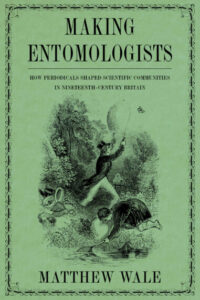
‘Twas not always thus. In the nineteenth century, the rise of journals in the fields of natural history in general and entomology in particular greatly assisted in the formation of communities of interest in the study of such subjects. They provided enthusiasts across a wide swatch of society the opportunity to exchange information with and learn from one another in a collegiality of print. In Making Entomologists; How Periodicals Shaped Scientific Communities in Nineteenth-Century Britain, part of the Science and Culture in the Nineteenth Century series from the University of Pittsburgh Press, Dr. Matthew Wale guides his readers through the history of Victorian entomology periodicals, examining previous assumptions about them, their publishers, and their readers, and in so doing provides fresh insights into the development of the field of entomology itself as well as into the growth of the division between “amateurs” and “professionals.”
Those interested in the history of entomology, of natural history, the development and practice of what is now called science communication are very much encouraged to take note of this book.
If you enjoyed reading this, please consider signing up for The Well-read Naturalist's newsletter. You'll receive a helpful list of recently published reviews, short essays, and notes about books in your e-mail inbox once each fortnight.
