
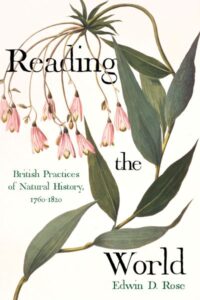
 If one was to make a list of the words potentially appearing on the cover of a book that would most likely stop me in my tracks whilst perusing the shelves in a bookshop, “reading,” “British,” and “natural history” would all be in the top ten. If a reference to the Eighteenth or Nineteenth Century was also added, I’d be found still standing there reading said book quite some time later.
Fortunately, to prevent me from blocking the aisle of a book shop, a copy of Reading the World; British Practices of Natural History, 1760-1820 by Dr. Edwin D. Rose reached me from its publisher by post. Taking up the history of books, manuscripts, and specimens during its stated time, Dr. Rose presents his discoveries about how these three items were not only important to the practice of natural history during the period, they contributed greatly to its flourishing then.
I’ll have much more to write in the near future about this book and what it contains, but for the present, if anyone needs me, I’ll be reading.
Nota bene: for those keen to learn a bit more about this enticing new book, a presentation about it delivered by Dr. Rose at the University of New South Wales is available online for viewing gratis.
If you enjoyed reading this, please consider signing up for The Well-read Naturalist's newsletter. You'll receive a helpful list of recently published reviews, short essays, and notes about books in your e-mail inbox once each fortnight.
