
In a time when the governments of some of the world’s most powerful nations are ignorantly and inexcusably slashing investment in scientific research that if properly funded would benefit not only their own citizens but the world as a whole (I’m looking at you, United States), The Royal Observatory, Greenwich is celebrating its 350th anniversary. Founded by King Charles II on 22 June 1675 for the purpose of helping to solve one of the Seventeenth Century’s greatest scientific conundrums: the longitude problem.
So wrote His Majesty in the order establishing it:
“Whereas, in order to the finding out of the longitude of places for perfecting navigation and astronomy, we have resolved to build a small Observatory within our Park at Greenwich upon the highest ground … with lodging rooms for our Astronomical Observator and his Assistant.”
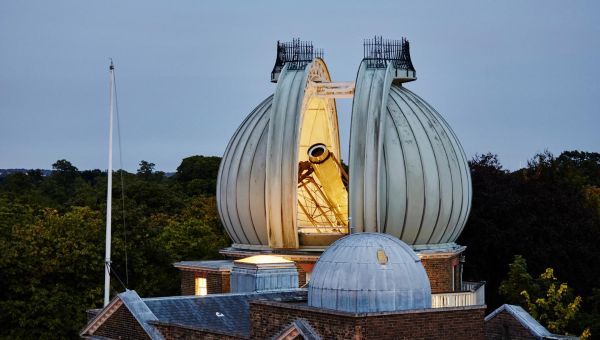 The Royal Observatory has since become a pillar of both a scientific and, thanks to the genius of Sir Christopher Wren FRS, architectural worlds.
You can learn more about it’s history through the institution’s website. And if you are so fortunate as to be living in Great Britain, or simply visiting there, I heartily encourage you to make a visit to this remarkable monument to scientific enquiry and learn more about the many advances in knowledge that all those who have worked there in the past, and those who do so today, have brought to the world.
If you enjoyed reading this, please consider signing up for The Well-read Naturalist's newsletter. You'll receive a helpful list of recently published reviews, short essays, and notes about books in your e-mail inbox once each fortnight.
